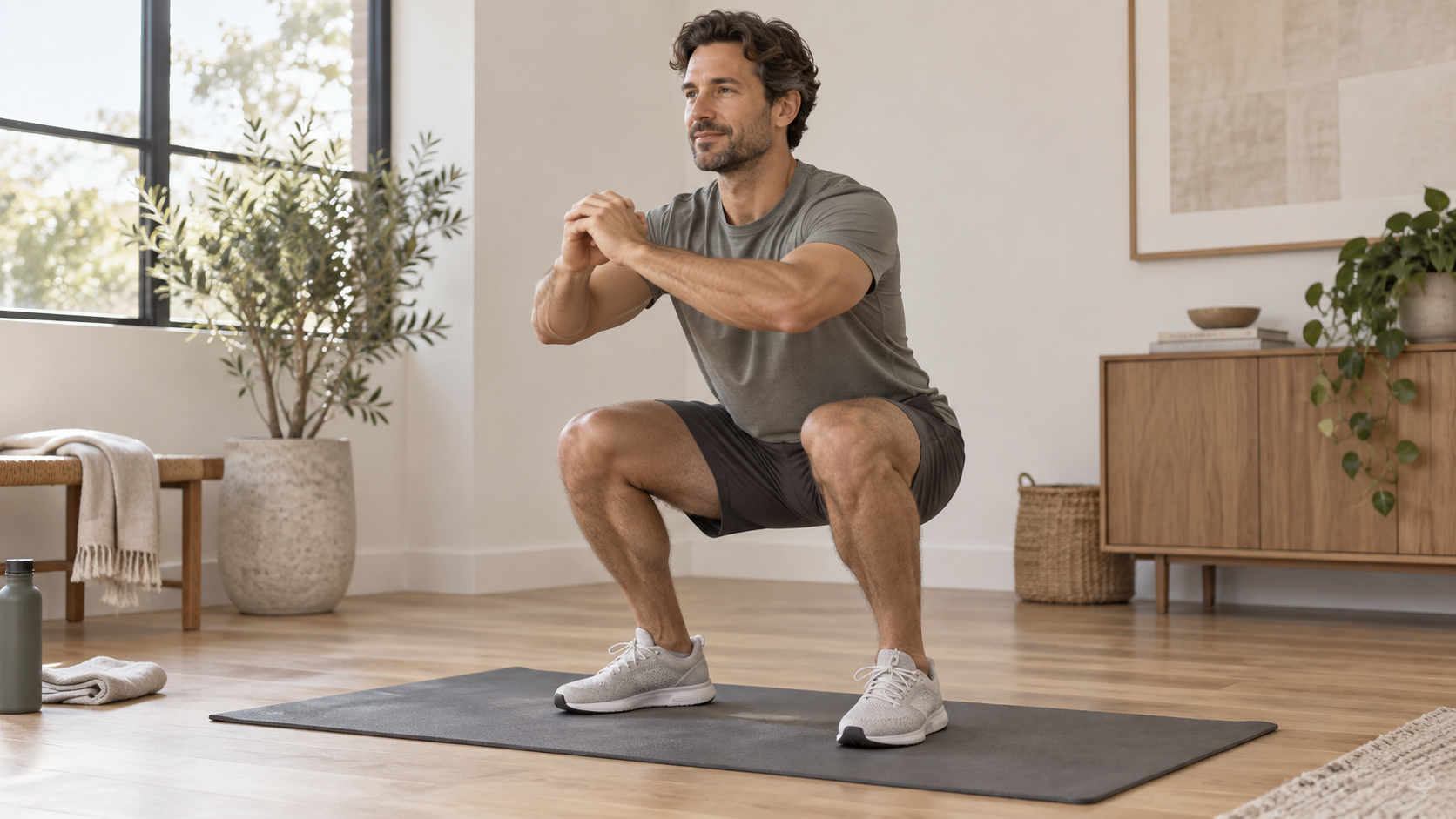
How to Train the Lower Body and Core: Squats, Lunges, Bridges, and Planks
Practical form, repetitions, and stop signs for the seven Strength Routines in BananaUp. These are general strength exercises, not a direct ED treatment.
Key points
It is hard to keep strength training going when “do squats and lunges” does not explain how the movements differ or how many repetitions count as a Routine.
BananaUp’s Strength Routines are not presented as exercises that directly treat ED. The WHO recommends muscle-strengthening activity that uses the major muscle groups on at least two days a week. A 2024 meta-analysis in men with ED did not find a clear difference from studies that combined aerobic and strength exercise alone.
Use these seven movements as bodyweight lower-body and core exercises, not as special erection training. If your knees, back, hips, shoulders, or another area hurts, stop instead of chasing the repetition target.
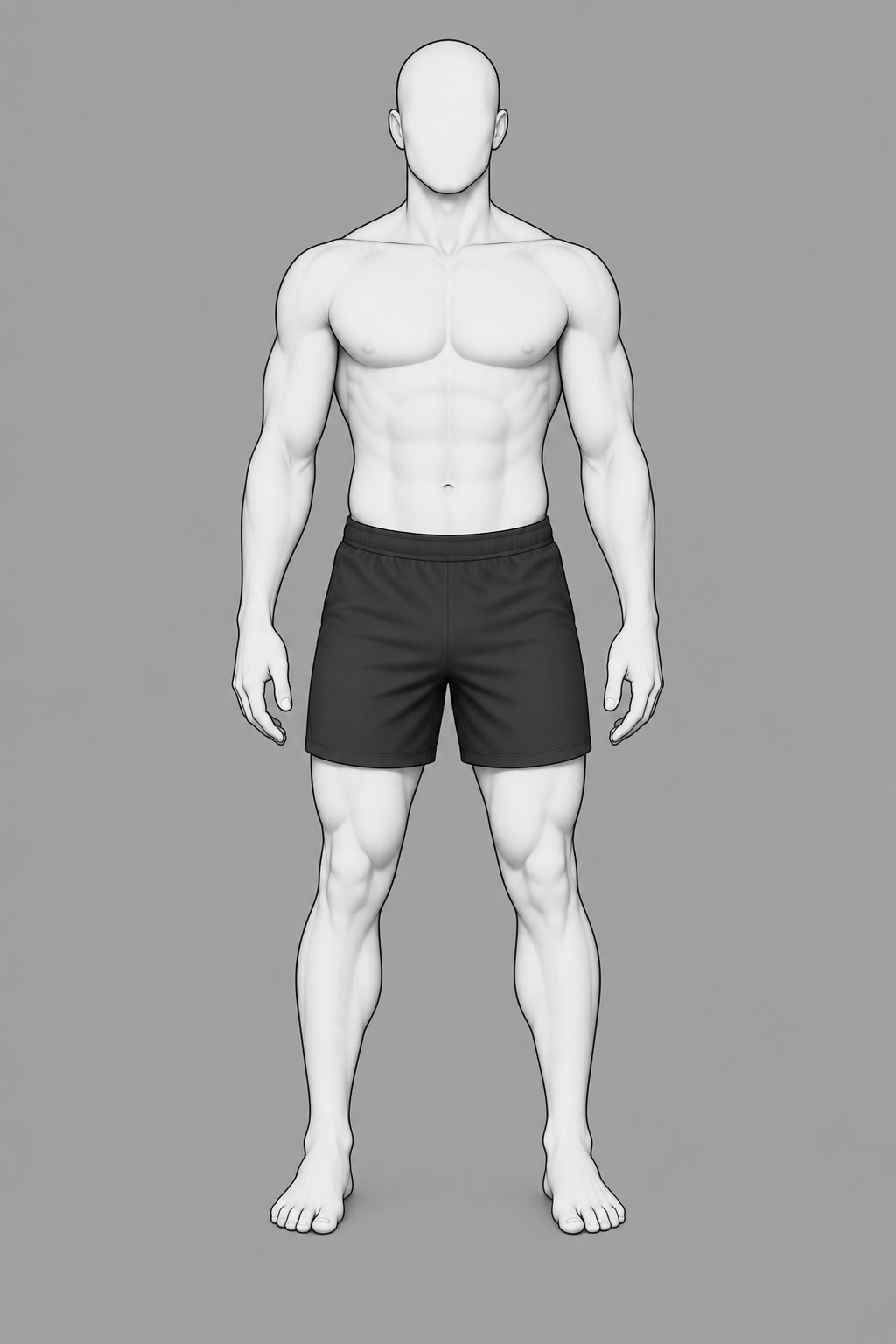
Bodyweight Squat
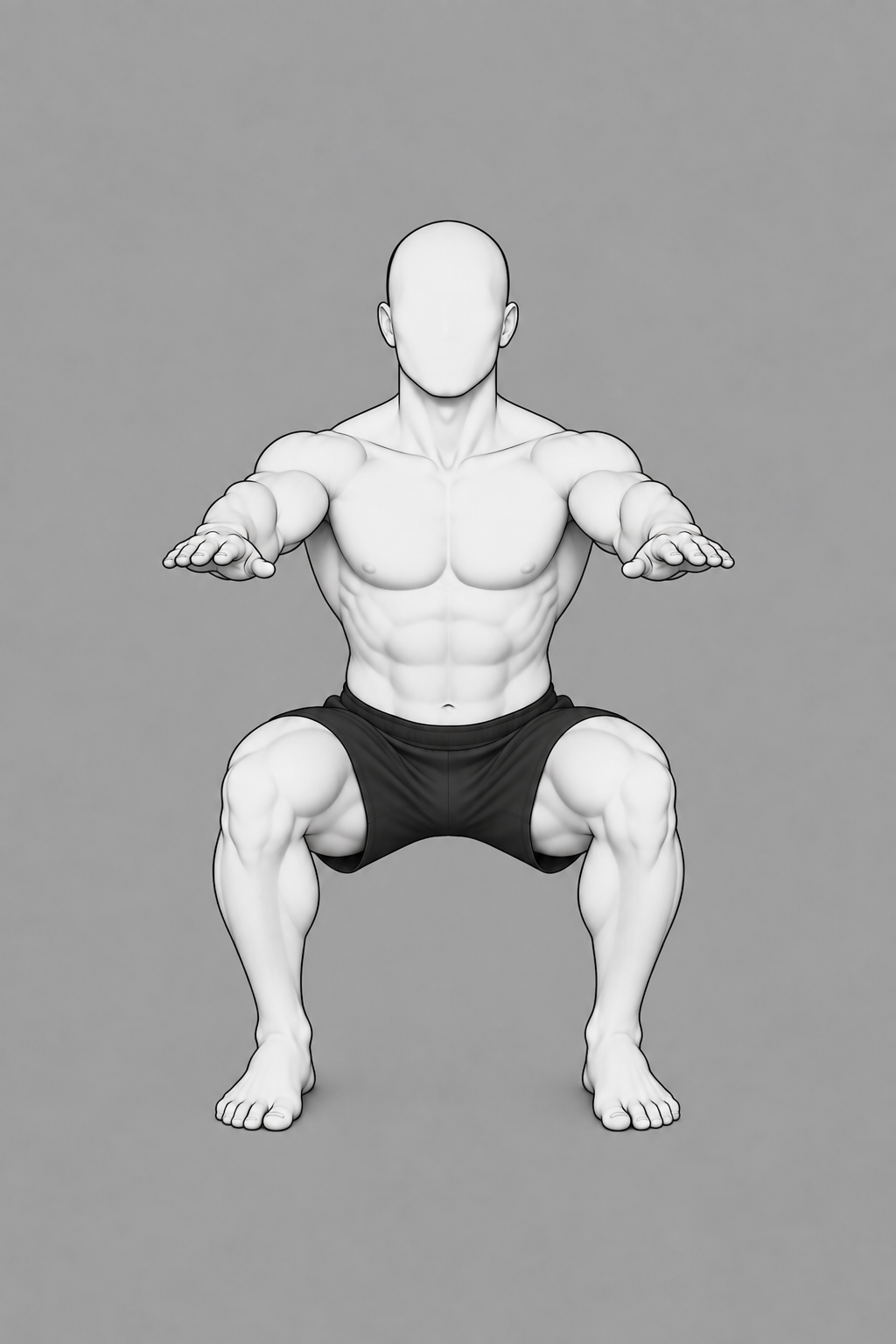
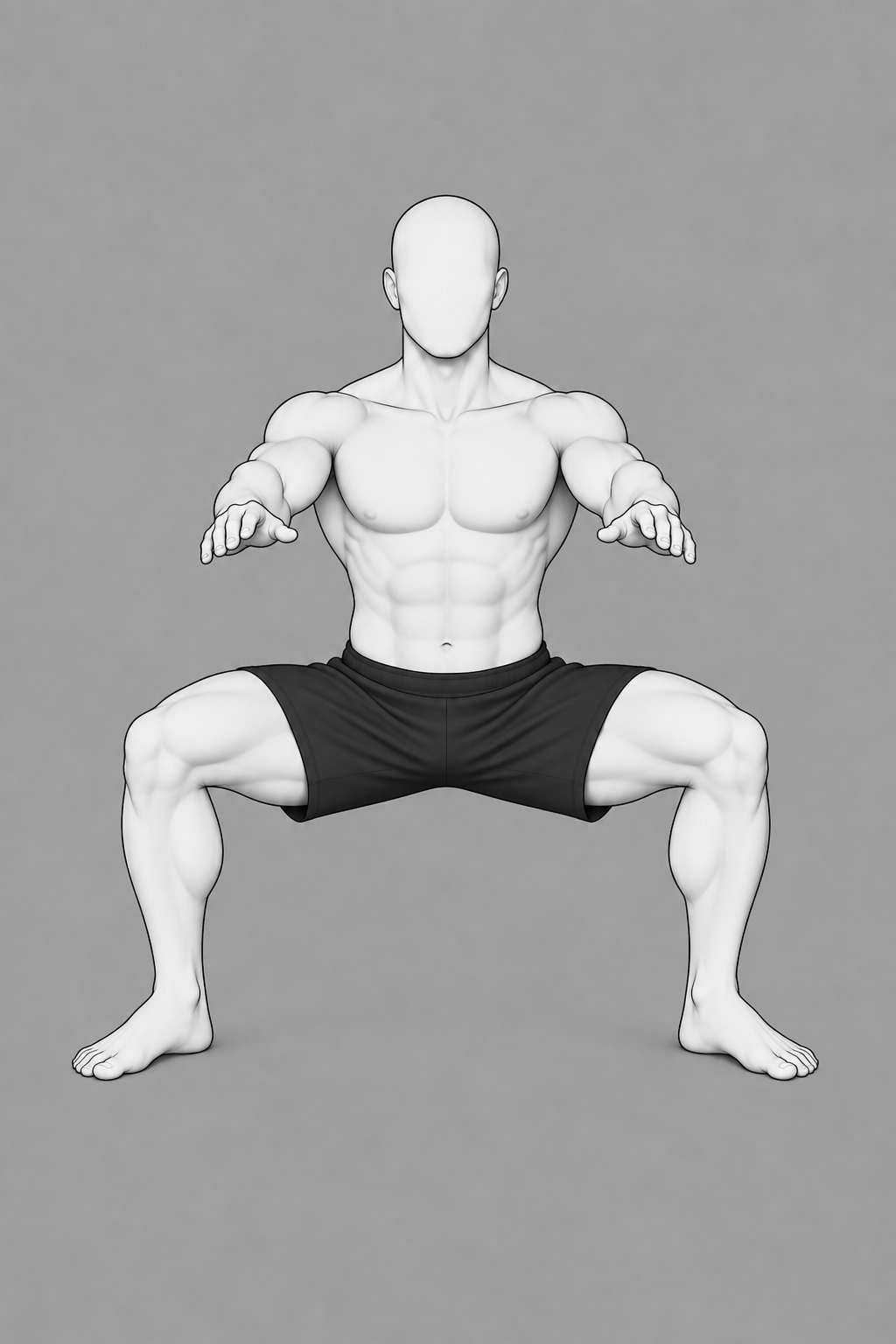
Wide Squat
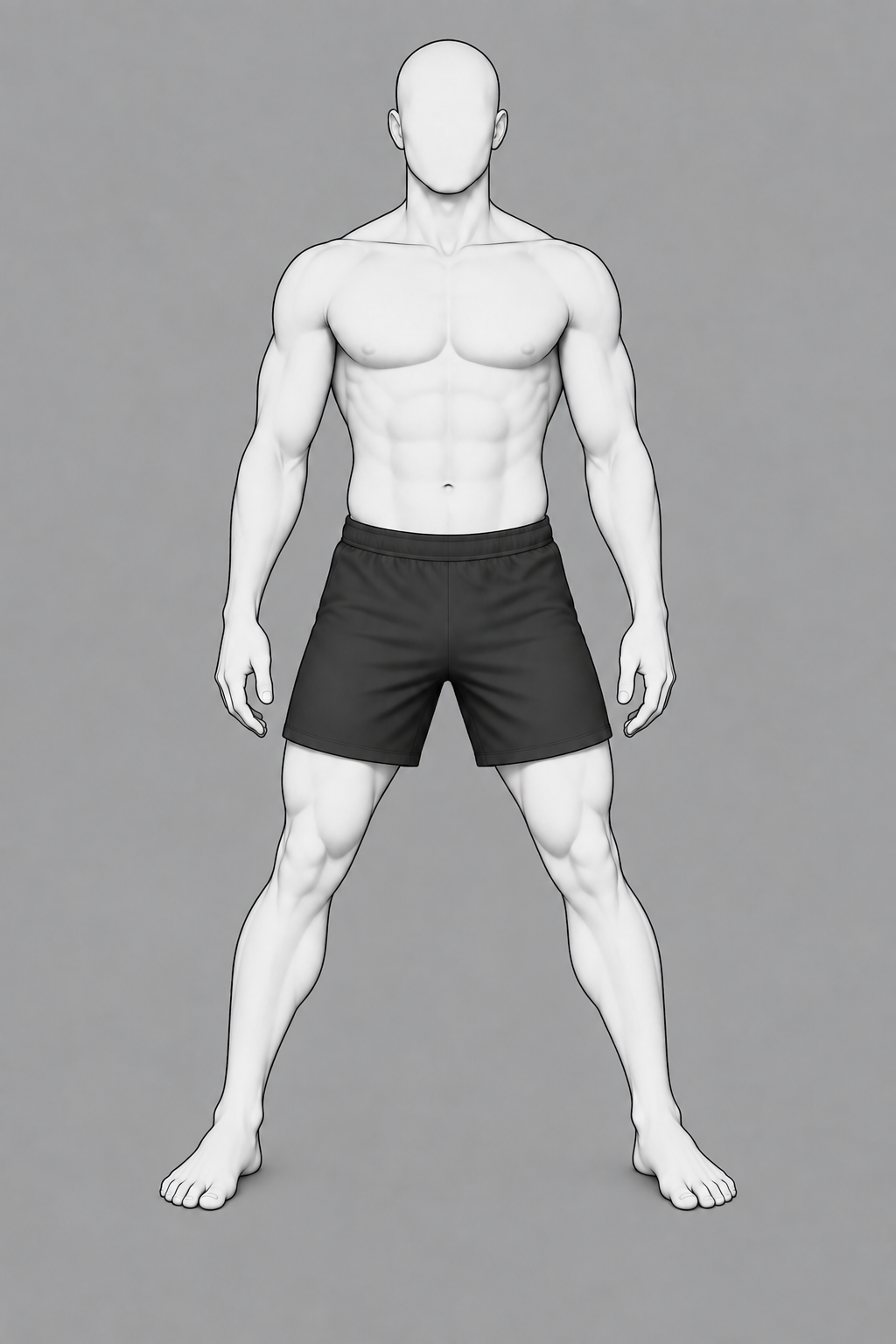
Split Squat
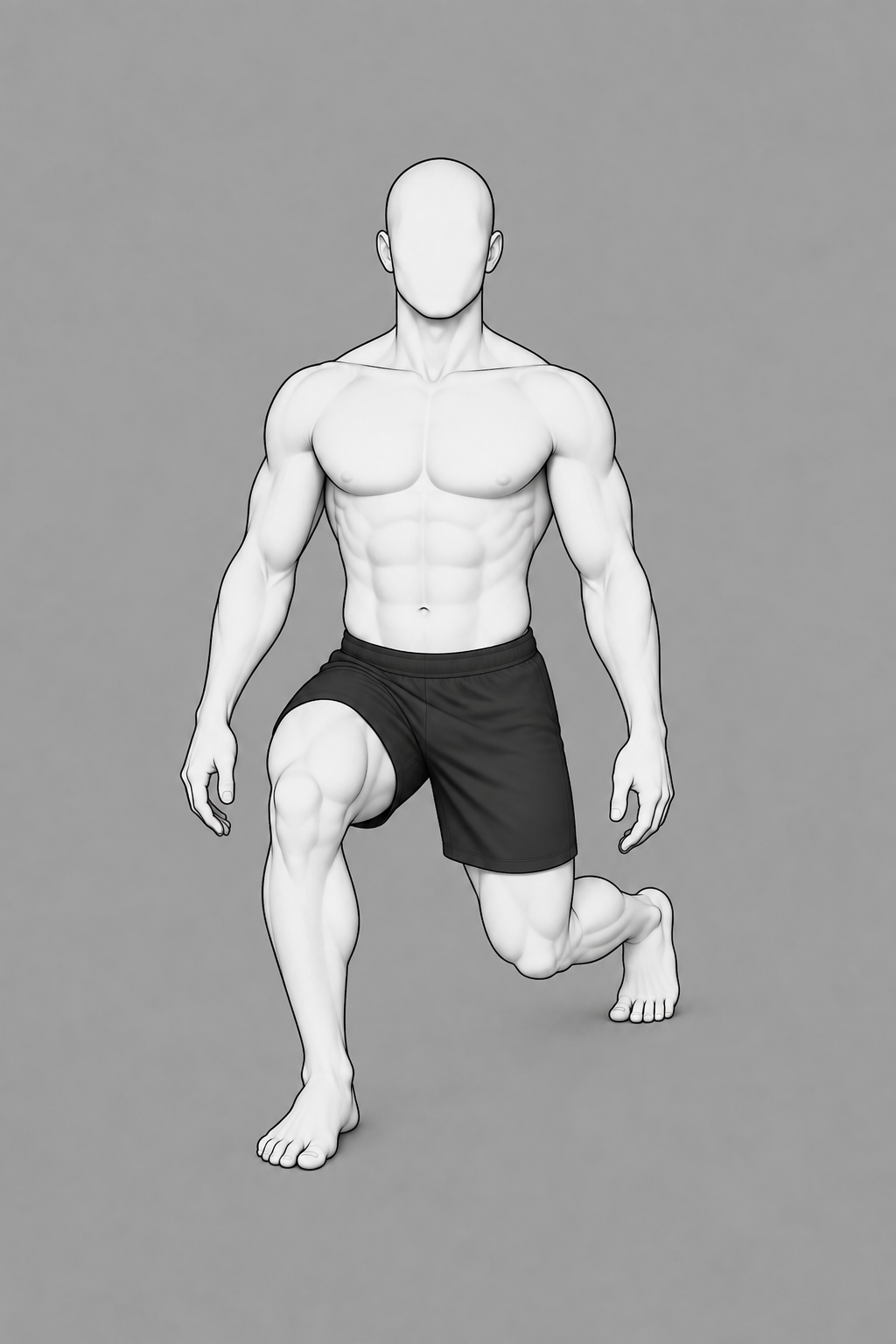
Reverse Lunge
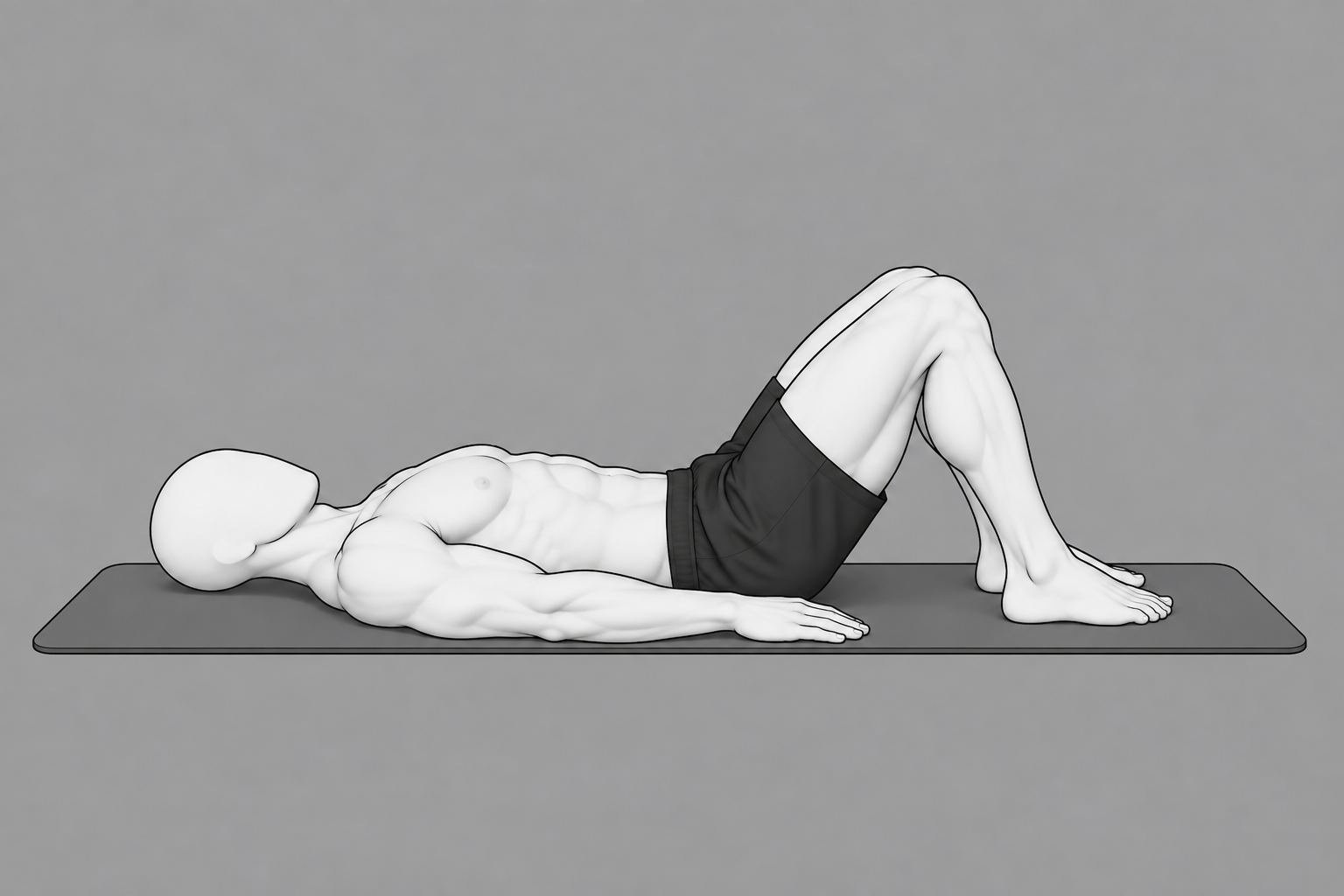
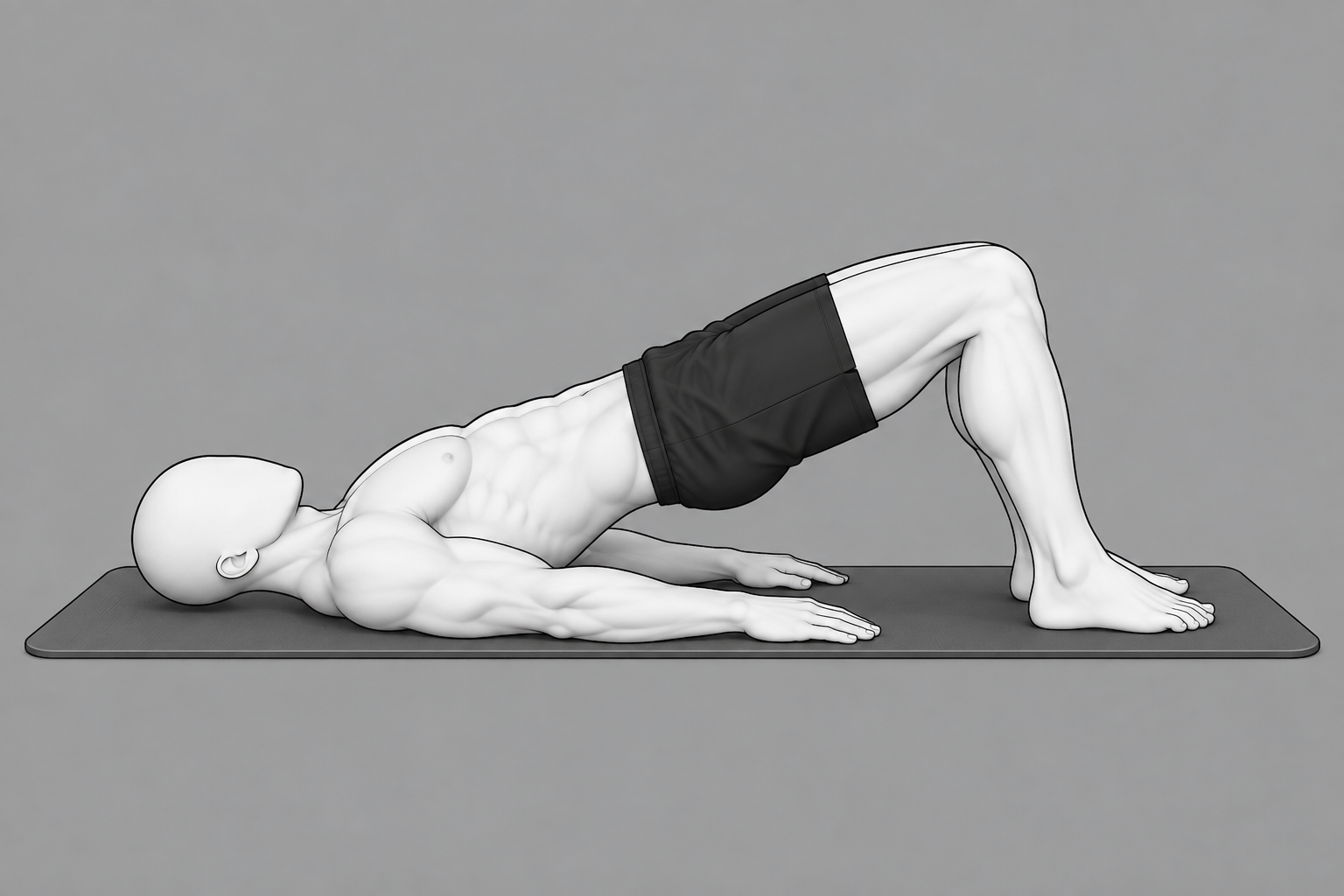
Glute Bridge
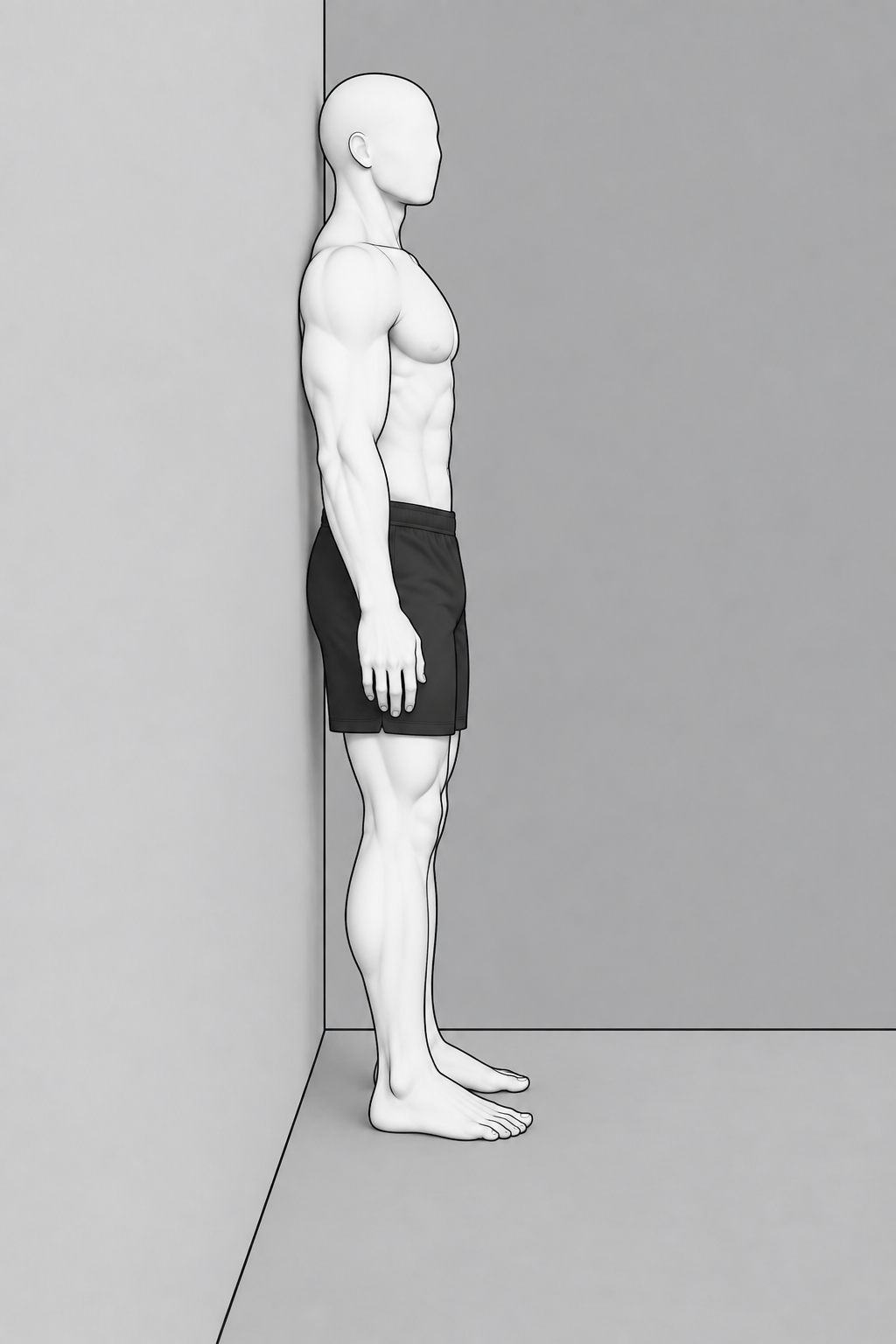
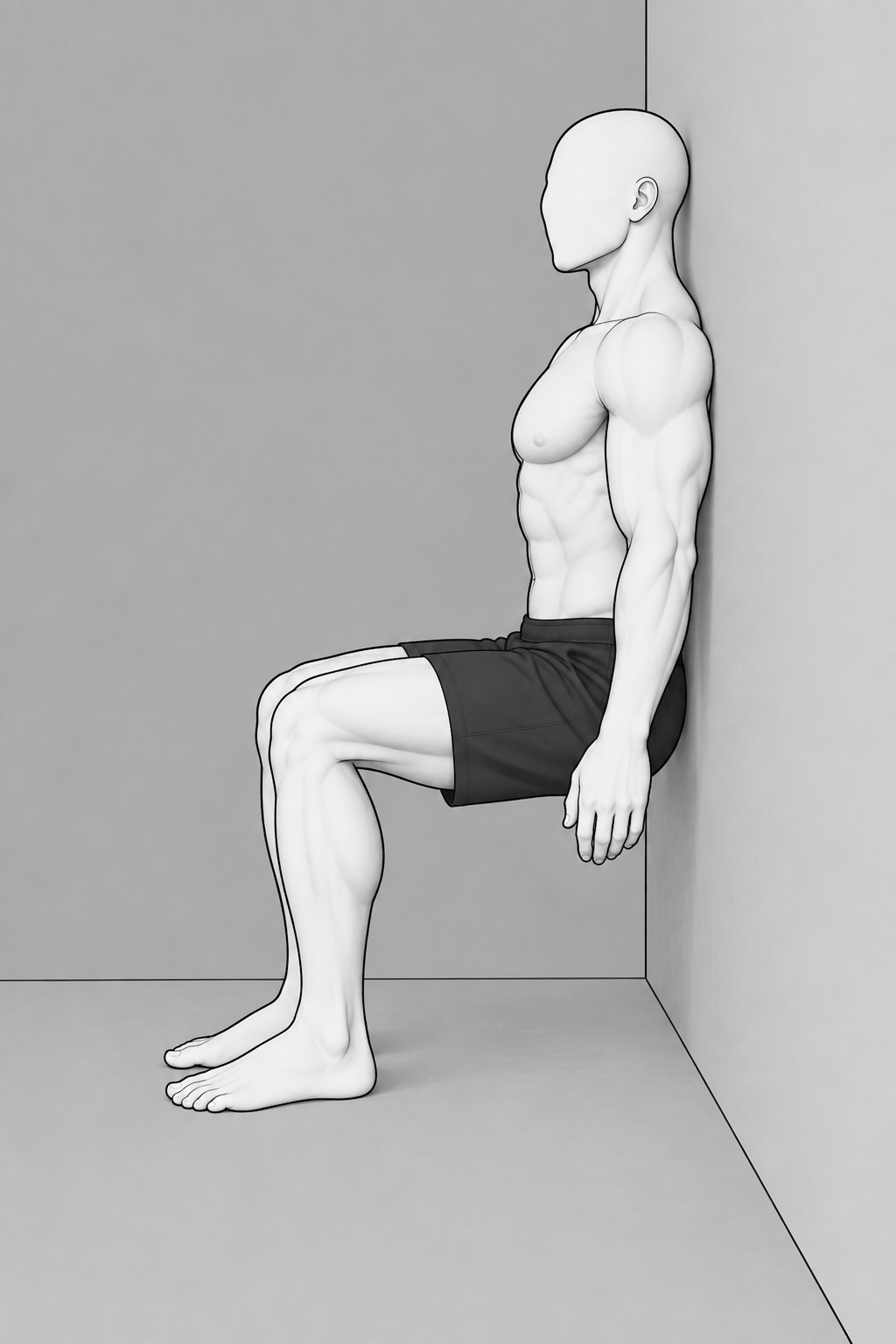
Wall Sit
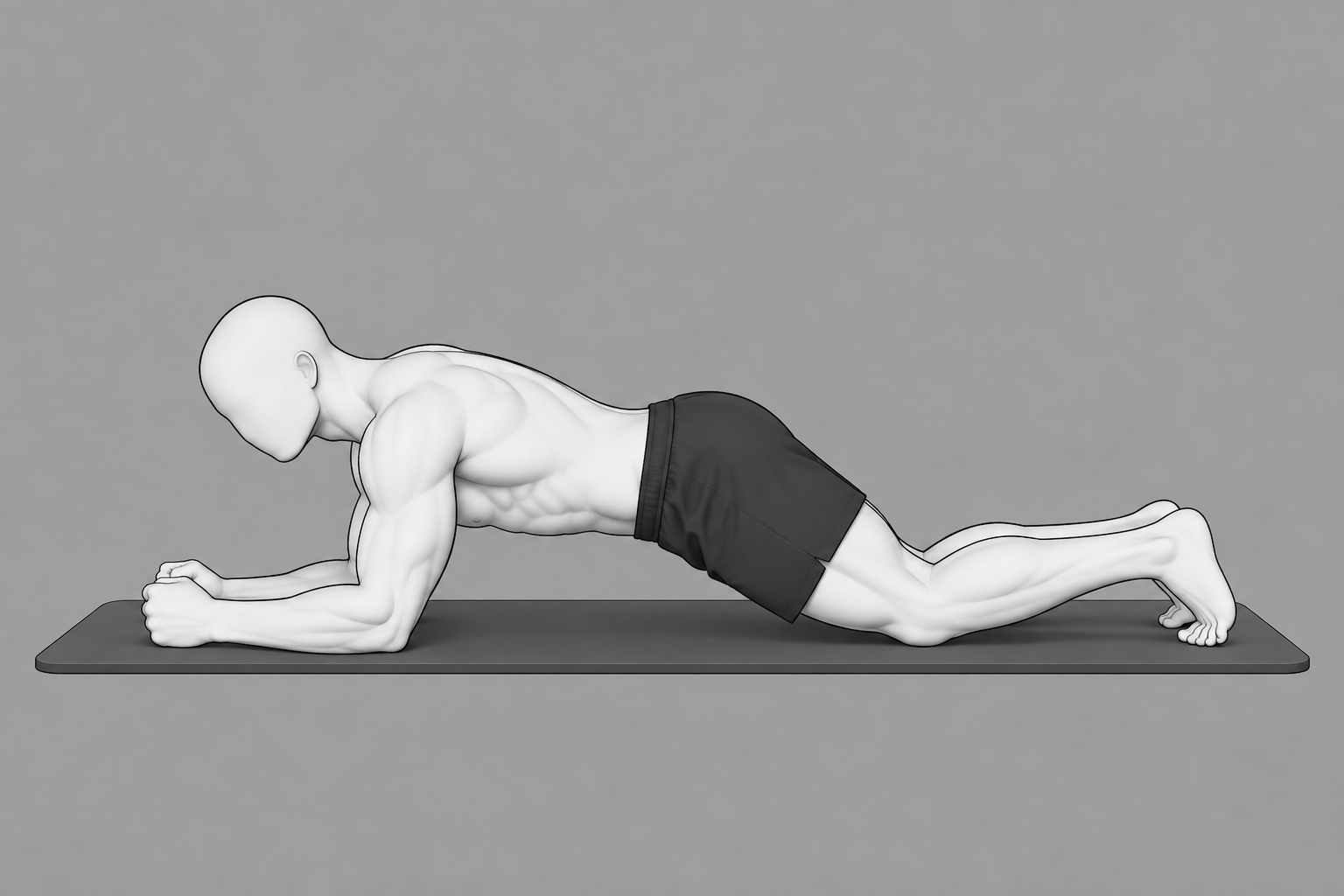
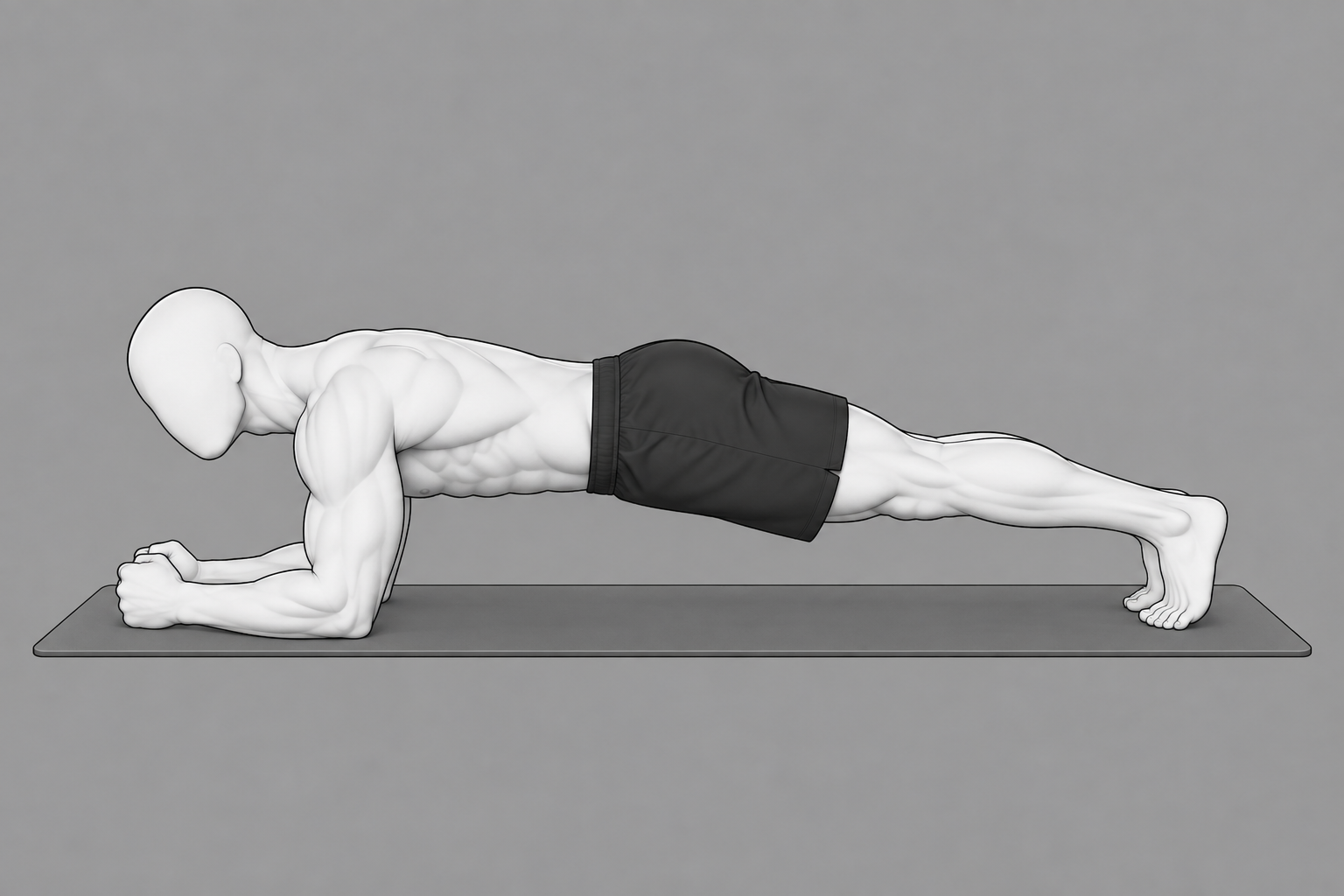
Plank
How to do Bodyweight Squat: 10 Repetitions for 2 Sets
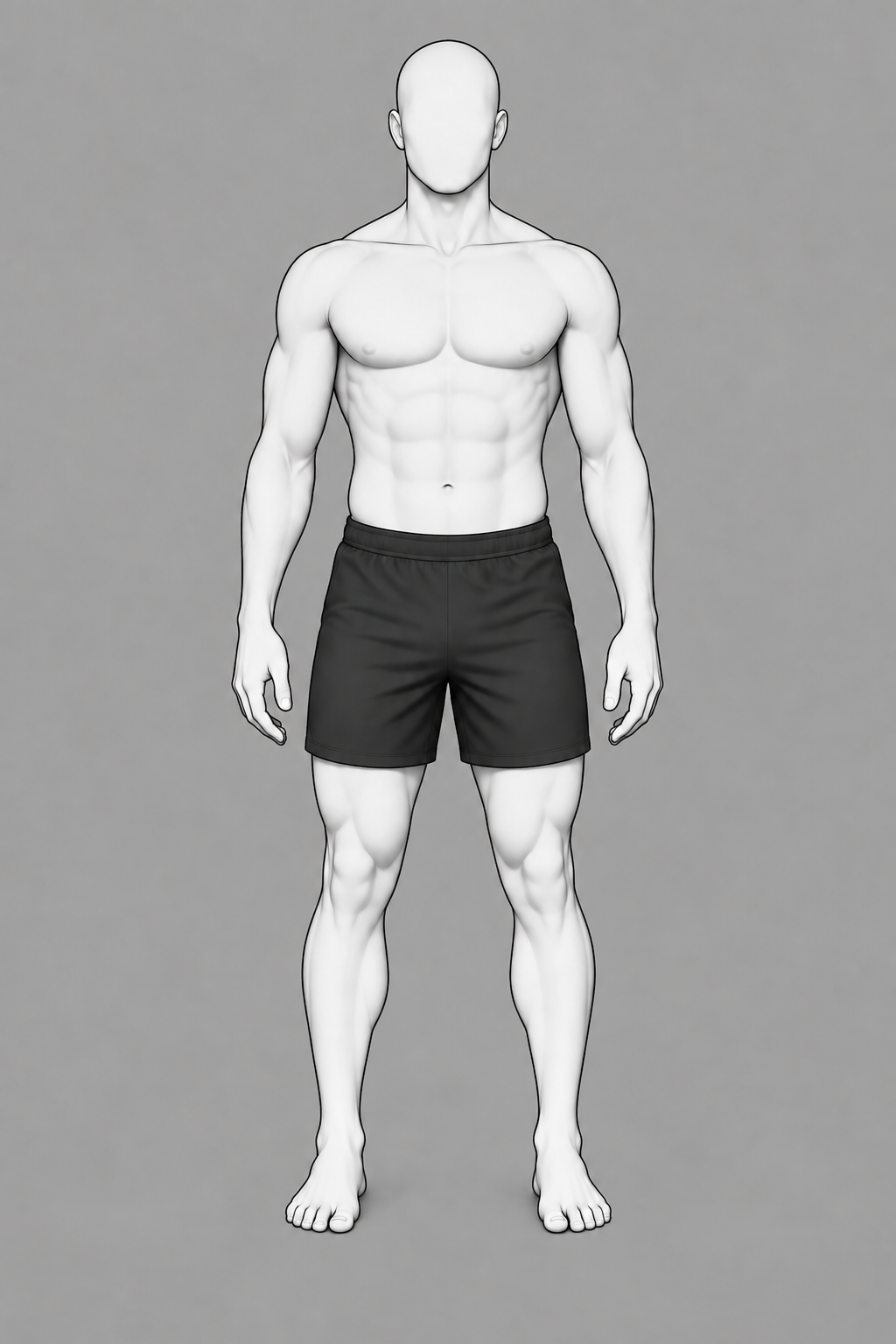
For bodyweight_squat, stand with your feet about shoulder-width apart. Let your toes point naturally and keep your knees moving in the same direction. Send your hips back as if sitting into a chair without rounding or over-arching your back.
You do not need to lower until your thighs are parallel with the floor. Stop at a depth where your heels stay down and your knees and back feel comfortable, then press through your feet to stand. Use 10 repetitions for one set, rest, and record two sets as the basic target.
How to do Wide Squat with Aligned Knees and Toes
For wide_squat, place your feet a little wider than for a regular squat and turn the toes slightly outward. Bend your knees in the same direction as your toes.
Lower your hips while sending them slightly back instead of dropping straight down. Use a shallower range if the knees keep falling inward, the hips feel sharp pain, or your feet are unstable. Do 10 repetitions per set for two sets.
You do not need to do bodyweight squats and wide squats on the same day. Choose one as that day’s Routine.
How to do Split Squat with the Feet Kept Forward and Back
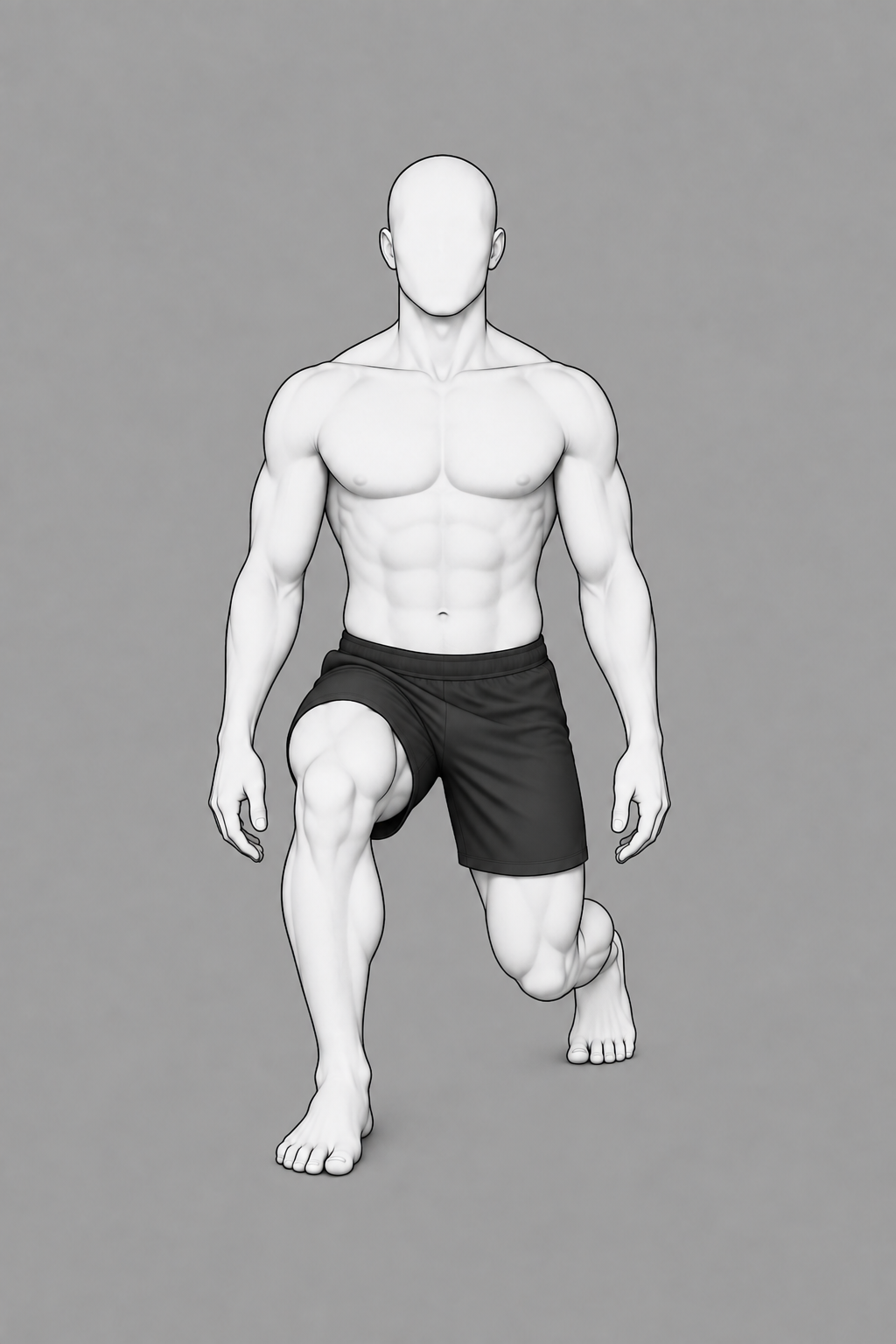
For split_squat, place one foot in front of the other and keep that stance while moving your body up and down. Lightly hold a wall or chair if needed.
Keep the front foot planted and lower slowly as if bringing the back knee toward the floor. Let the front knee follow the direction of the foot and keep the body from swaying side to side. Start with 8 repetitions per side, rest after one set, and add a second set only when it remains comfortable.
How to do Reverse Lunge by Stepping Back
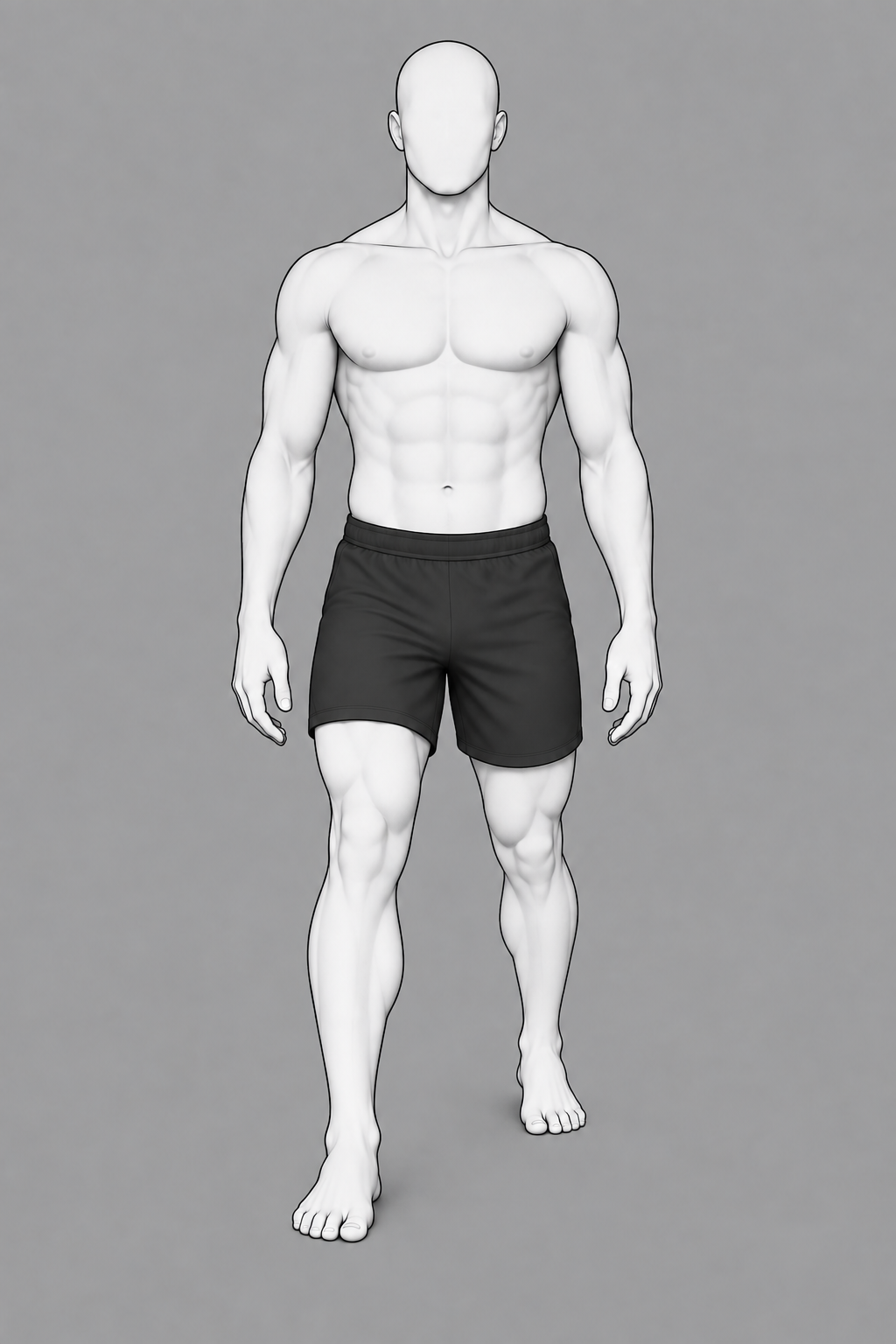
For reverse_lunge, start standing and step one foot backward. Bend both knees, then press through the front foot to return to standing instead of pushing off hard with the back foot.
Because you bring the feet together after each repetition, this has more movement than a split squat. Begin with a short step and use a wall or chair if you feel unsteady. Start with 8 repetitions per side and use two sets only when comfortable.
How to do Glute Bridge by Lifting the Hips
For glute_bridge, lie on your back with both knees bent and both feet on the floor about hip-width apart. Keep your shoulders and head supported.
Keep breathing, tighten the glutes, and lift the pelvis slowly. Stop when your shoulders and knees form a gentle line; do not arch the lower back hard. Lower back down with control. Use 10 repetitions for one set and two sets as the basic target.
Lower the height if your back hurts, and stop if the pain continues.
How to do Wall Sit Starting at 30 Seconds
For wall_sit, place your back against a wall and move your feet slightly forward. Slide down as if sitting while keeping your back supported.
You do not need to bend the knees to 90 degrees. Stop at a height where your legs work but your knees do not hurt. Start at 30 seconds and keep breathing.
When finishing, do not stand up suddenly. Use the wall and straighten your knees slowly. End immediately for numbness or knee pain.
How to do Plank for 20 Seconds Before the Back Drops
For plank, support your body on your forearms and toes from a face-down position. Place the elbows near the shoulders and keep the head, trunk, and heels as straight as you can.
Brace the abdomen lightly without holding your breath. Finish before the lower back drops, the hips rise too high, or the shoulders or back hurt. BananaUp uses 20 seconds as the starting target.
If 20 seconds is too difficult, finish sooner. Repeating a controlled position matters more than extending the time.
You do not need all seven movements in one day
Strength Routines are not a contest to increase the number of exercises. Record a squat on a squat day and choose a bridge or plank on another day if that fits better.
The article “Do Squats Improve Erectile Function?” sorts out the research on strength exercise and ED. This page does not turn those findings into a guarantee for any one movement; record the exercise, repetitions, pain, and fatigue you actually experienced.
Stop for chest pain, fainting, or unusual severe shortness of breath. If knee, back, or hip pain continues, ask a healthcare professional before increasing repetitions.
Choose one Strength Routine from the Routine Finder and record the movement and repetitions in BananaUp’s 14-day tracking.
Sources
Feel good aboutwhere you are lately?
Keep your confidence as a man, ready for the moments that matter.
- Move closer to your ideal self
- Aim higher as a man
- Build confidence